Book Reviews

Who Cooked the Last Supper? Review

Who Cooked the Last Supper? by Rosalind Miles

Rating: ⭐️⭐️⭐️/5

As a lover of books with strong female leads, whether historical fiction or fantasy, I decided to give Rosalind Miles’ Who Cooked the Last Supper? a chance. Good thing I did because the book gave me a whole new knowledge of the horrors and struggles women faced throughout history.

Miles explores the roles of women from the beginning of time to the current state of the female sex. It was interesting to read about the days of the Great Goddess before man created a monotheistic, male-led religion and women’s influential role before men came to “conquer” us. It is shocking and, quite honestly, horrifying to see how women were put down because of male insecurities—seen as monstrous demons instead of the beautiful givers of life they used to be. I rolled my eyes many times while reading due to the absolute idiocy of female oppression discussed in the book. It was appalling to read how women were treated in the past and still to this day.

What I appreciate the most from Who Cooked the Last Supper? is the new information I gained. I never completely understood or even heard of how men tried to control women using their minds and body, such as through the terrifying practice of genital mutilation. I also love that Miles didn’t focus on one group of women but wrote about women worldwide. She could have easily only mentioned white American women, but she didn’t. Although, I would have liked more discussion on the dual struggles women of color faced because of sexism and racism.

Miles had an amusing and entertaining way of using sarcasm and irony to get her point across. I enjoyed that immensely. What other way can you get through a book about women’s depressing and infuriating oppression without using sarcastic humor to lighten up the reading experience? Even though the book discussed the wins women were rewarded for their strength and perseverance, the losses would have swallowed me whole if there wasn’t some form of humor in Miles’ writing.

Who Cooked the Last Supper? was an informative read that I recommend to anyone interested in learning more about women’s history in the world.

Book Reviews

Freddie Mercury: A Kind of Magic Review

Freddie Mercury: A Kind of Magic by Mark Blake

Rating: ⭐️⭐️⭐️/5

Mark Blake’s Freddie Mercury: A Kind of Magic is a biography based on the legendary lead singer of Queen. The biography looks into the singer’s childhood and life before he reinvented himself into the icon Freddie Mercury, his years before Queen became a band, and of course, the years Queen was together.

The biography was relatively short. I would have loved more information, but the author made up for that with his passion for Queen’s music. It was evident throughout the entire book that Blake was an honest fan of Queen. He handled every stage of Mercury’s life with care. He did his best to represent who Mercury was as a human being and artist. I loved that the book wasn’t just a list of facts. It told a story and kept it interesting with antidotes from Mercury’s life. A Kind of Magic features multiple quotes from the people closest to Mercury, such as Queen band members Brian May, Taylor Roger, and John Deacon. Blake even included quotes from the man himself. It felt like I was getting the authentic version of Mercury’s life and not a fictitious tale of the many rumors surrounding the legend.

As a music lover, it’s nice to read more about the recording process of one of the greatest bands in history. I also loved how Blake described in much detail each Queen album’s musical aspects. The pictures featured in the biography were stunning! I had never even seen some of those pictures before, which was a delightful surprise.

Overall, I enjoyed reading Freddie Mercury: A Kind of Magic. However, I hope to find another book that goes even further into the musical genius that is Freddie Mercury. It was a tad more basic in the overview of his life than I had expected. Still, Blake’s sensitivity and love for the book’s subject made it enjoyable.

Book Reviews

Throne of Glass Review

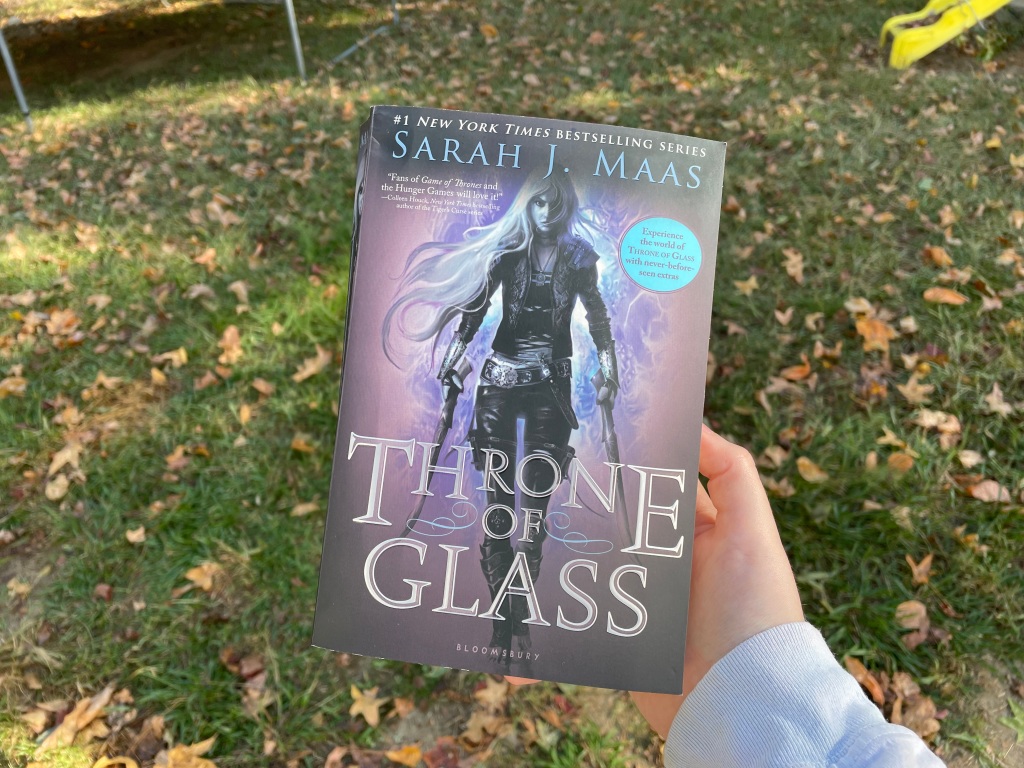
Throne of Glass by Sarah J Maas  

Rating: ⭐️⭐️⭐️⭐️⭐️/5

In the Throne of Glass, a young assassin sent to a vicious labor camp is chosen by the Crown Prince as his champion in a competition to be the King’s Assassin. This young woman has the chance to win her freedom and accepts, and her journey begins.

I’ve learned by now that Sarah J. Maas will never disappoint me. Throne of Glass was an absolute pleasure to read. From the first chapter, Maas sucked me into this new world filled with assassins, sarcasm, dreamy men, mysterious deaths, an evil King, and magic (Ironic since magic is banned in Adarlan). Throne of Glass is a book that makes someone stay up all night reading chapter after chapter, wanting to know what will happen next.

Celaena Sardothien must be one of my favorite book characters of all time. I loved her from the first moment she was introduced in the book. Her humor and sarcasm in the first pages of Throne of Glass pulled me in. As an assassin sent to a labor camp as a slave in Endovier to die, it’s expected that someone would lose their inner light, but Celaena never did. She survived when others perished within months and didn’t lose herself in the darkness. Celaena’s humor and witty remarks forced a smile on my face multiple times. I loved my sassy assassin. I also loved her inner strength and bold spirit. The ruthless duel between her and Cain (hate him) was tough to read, but Celaena’s will to keep fighting even when she was severely weakened made it all worth it. I can’t wait to learn more about her in the coming books! Her mysterious background before she became an assassin has me intrigued beyond belief.

Since Throne of Glass was written by Sarah J. Maas, it was not surprising to see some dreamy men in the book. The two love interests, Dorian and Chaol, could not have been more different. Dorian, Prince of Adarlan, was playful and flirty. Chaol, Captain of the Guard, was guarded (no pun intended) and distrustful…at first. Dorian fell for Celaena quickly, but Chaol took much longer to truly see Celaena for who she really was outside of being an assassin. Yes, Dorian was charming, and Chaol could be an asshole to Celaena sometimes, but I couldn’t help but love Chaol more. The connection between Chaol and Celaena seemed deeper than Dorian and Celaena. And Chaol doesn’t even kiss Celaena in Throne of Glass! I did have a love for Prince Dorian, and he will be an excellent king, but he wasn’t the right fit for Celaena. It was clear in the final duel between Celaena and Cain that Chaol understood her in a way that Dorian did not.

One of my favorite parts of Throne of Glass was the friendship between Celaena and Princess Nehemia. This is the dynamic duo I needed! Two badass women who rebel against authority and do it beautifully with attitude and grace. What could be better than that? Celaena needed a friend in the glass castle, and Nehemia was a perfect choice. I’m excited to see more of this duo in future books.

The competition itself was a little lackluster. The Tests could have been more exciting but the mysterious and brutal deaths of the champions made up for that. Beyond the fantastic characters, a dark creature was wreaking havoc in the castle. The deaths of the champions left me on edge. Maas is good at creeping me out using these scary and monstrous creatures. The fight between the monster and Celaena was a little bit of a letdown due to the buildup in previous chapters. However, it all came together in the final duel when Celaena must face an even bigger foe.

The underlining discussion about King Adarlan taking over all of Erilea and the banishment of magic is something I look forward to unpacking more in the following books. Obviously, magic is still present in their world, and I have a feeling it will be seen more as I go further into the series. I cannot wait!

I loved reading Throne of Glass. I would recommend it to anyone who has read the ACOTAR series or loves fantasy fiction. You will not want to miss out on this book!

Book Reviews

The Memoirs of Cleopatra Review

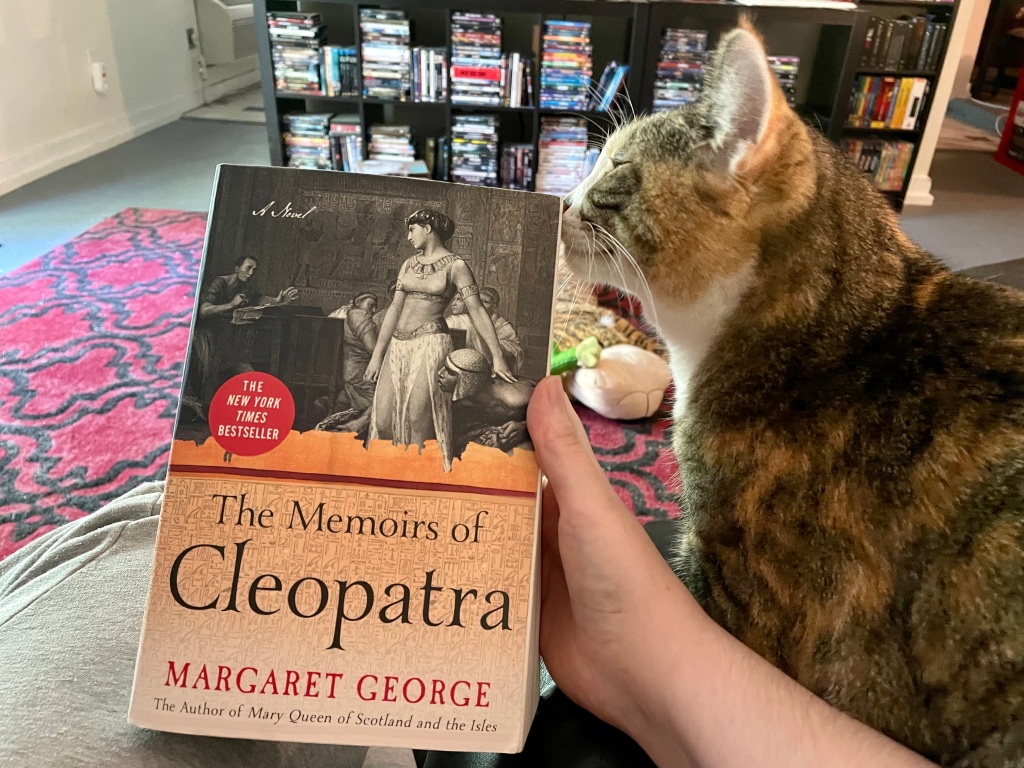
The Memoirs of Cleopatra by Margaret George   

Rating: ⭐️⭐️⭐️⭐️⭐️/5

Margaret George’s The Memoirs of Cleopatra tackle the difficult task of telling the story of Cleopatra’s life. The last Ptolemy to rule Egypt. The great Queen of Egypt. Cleopatra was not only a clever Queen but also a mother and woman who loved two powerful Roman commanders. She faced many challenges before and during her rule. Writing this novel had to have been daunting, but George pulled it off beautifully.

The Memoirs of Cleopatra is written as if Cleopatra is writing her life story on scrolls for someone to read once she is gone from the world. She wanted her truth written to combat others’ versions of Cleopatra. I enjoyed George’s choice to write out Cleopatra’s life this way. It gave a more personal feel to the novel. I especially loved how the story is so highly detailed. This is a 900+ novel filled with every possible observation, small or large, that made up Cleopatra’s daily ongoings and significant life events. 

I deeply admire the Cleopatra presented in The Memoirs of Cleopatra. You can see how clever and curious she is from a young age. Her ability to soak up knowledge like a sponge is one of my favorite qualities of Cleopatra. Once she came into power, Cleopatra’s pure perseverance and durability were what made her the ruler she was. Every choice she made in the novel was to keep Egypt safe and prospering. Her love for her country. George made it clear that although Cleopatra was a fighter in spirit, she was also a true lover. I loved reading about Cleopatra as a mother. It was apparent that she was a devoted mother and only wanted the best for her babies. I also appreciated the genuine friendship between her attendants, Iras, Charmian, Mardian, and Olympos.

Now with her strengths also came weaknesses that I did not like. Her ambition that emerged during her time with Caesar and kept growing afterward was my least favorite aspect of her personality. I wanted her to live a happy and peaceful life in Egypt with her children. But a ruler’s mindset can be taken over by the temptation of growing an empire for her family.

It would not be the story of Cleopatra without two men: Julius Caesar and Marc Antony. The two loves of her life. The two men were so different from one another. One is perceived to be a god among men. Another is a mortal forced into a role he did not want. Caesar came into Cleopatra’s life when she fought for her right to be Queen of Egypt. The instant connection between them was staggering to behold in written form. George somehow brought these two larger-than-life beings together in a mystical yet organic way. Cleopatra and Caesar’s tale of love was anything but ordinary. This was clear when George represented them as reincarnations of the goddess Isis and the god Amun during the two lovers’ first meeting and night together. George showed how difficult it was for Cleopatra to love a man who was not seen as a mere mortal. It was angering at times to see Caesar’s life in Rome (his wife, the Senate, Roman customs) affect Cleopatra so much. I didn’t particularly like Caesar as a love interest. He couldn’t give her the love and affection Cleopatra truly deserved. She couldn’t control who she fell in love with, and for that, she was constantly attacked for it by the Romans.

And her torture by the Roman people did not end with Caesar’s death. No. Cleopatra’s heart would lead her to one other Roman man. During the love affair with Caesar, Marc Antony did not play a huge role in The Memoirs of Cleopatra. He was here and there, but mostly just a side character, as Cleopatra ironically did not think much of him. When they met again years after Caesar’s murder, the sparks and chemistry flew off the pages. Cleopatra and Antony’s love was full of passion. Everything they did was extreme and passionate, from the love declarations to their fights.

In contrast, Caesar couldn’t give his whole self to Cleopatra. Antony was a willing servant to his love for her. He was not a perfect man, and he made mistakes, but it couldn’t be argued that Antony did not love with everything he had. Antony appreciated Cleopatra for the woman and leader she was. I loved that characteristic of him. However, Antony could be pretty toxic at moments in the novel. He was such a complex character. I sometimes wanted to hate him, but I couldn’t ignore his unadulterated devotion to Cleopatra.

Let’s not forget the worst character in the novel, Octavion. I hated him with my whole heart! I wanted to jump into the pages and beat that cowardly snake. He was the absolute worst. I have nothing nice to say about Octavion. I loved how Cleopatra won her final battle against him by tricking him and ending her life on her terms.

I undoubtedly enjoyed reading The Memoirs of Cleopatra. Every page was an adventure, and I experienced every possible emotion while reading. I would recommend this novel to historical fiction readers interested in the mystery of Queen Cleopatra.

Book Reviews

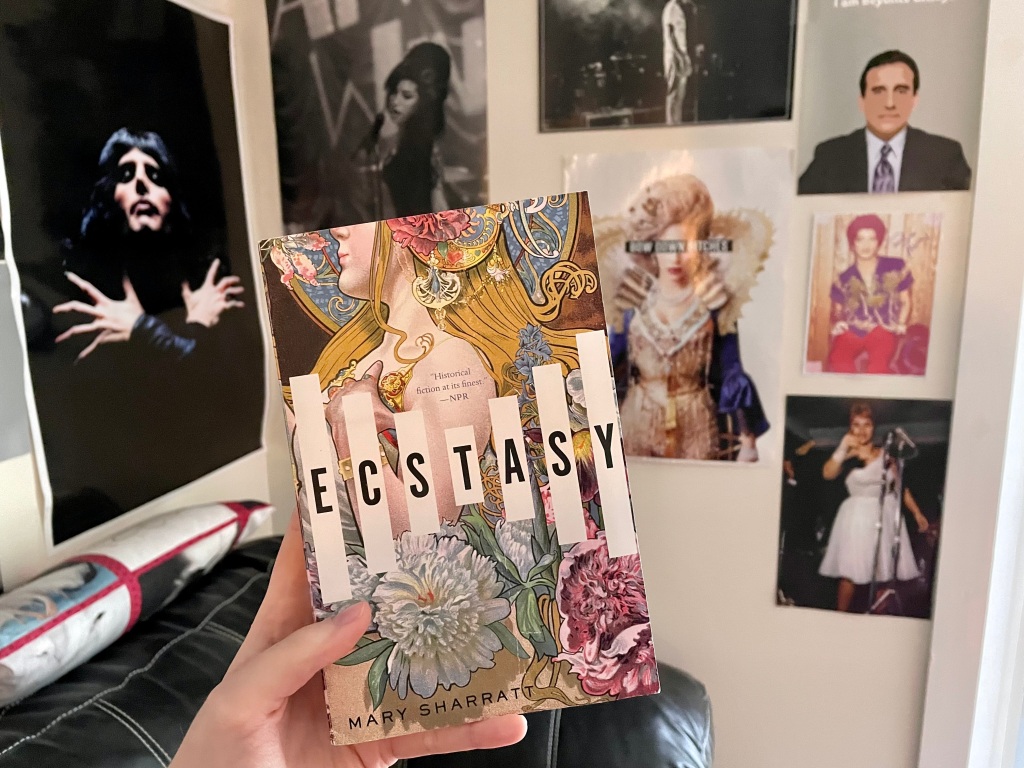
Ecstasy Review

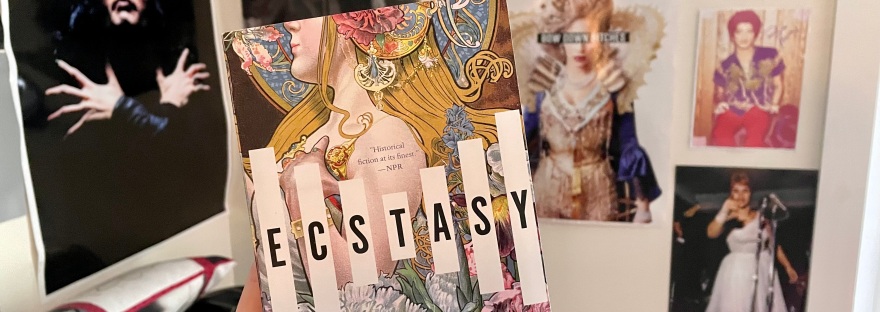
Ecstasy by Mary Sharratt   

Rating: ⭐️⭐️⭐️⭐️⭐️/5

Alma Schindler was considered the most beautiful woman in Vienna before marriage. She lit up a room the minute she strolled in and enchanted every man that came across her. But she was not only a socialite. Alma was an ambitious and creative young woman who strove to make a name for herself as a composer. Her talent, drive, and beauty are probably what led to the men in her life falling in love with her. The most famous of her lovers was the great composer and conductor Gustav Mahler, whom she would marry at 22.

Mary Sharratt’s Ecstasy explored the life of Alma Mahler, née Schindler; from her sexual awakening at the young age of 19 to her first husband, Gustav Mahler’s death when she was 32. As a young woman living in a society full of artists, architects, and the intelligentsia, Alma, as a character, was raised believing that she could take her love for music and create a life for herself independent of a man. But as she experienced the first hint of sexual desire at 19 years old, Alma found that there was a whole other aspect of life she wanted to explore: love and lust.

As a character, Alma is impossibly complicated, and Sharratt displayed this perfectly by representing the two warring sides of Alma as the demure and obedient Eve and the defiant and carnal Lilith. In the novel, it seems Alma was constantly fighting herself. Even before she was married, the need to compose and live her life to the fullest as a New Woman of the early 1900s was challenged by the worry of being considered the “third sex” or alien compared to traditional women. Once Alma was married to Mahler, that internal war only grew more violent as she became a mother and was constrained to the ideas of what Mahler thought a wife should be. Sharratt’s narration of Alma’s inner turmoil as a woman drowning in her husband and European society’s views of a woman’s place in the world left me, as the reader, desperate for Alma’s musical survival.

Alma’s sheer passion for music was what I treasured most as I read Ecstasy. Any music lover would feel a particular connection to Sharratt’s account of Alma’s total enraptured state after hearing a dazzling piece of music. Sharratt’s effort in describing the music Alma heard made it easy to feel how significant music was in Alma’s life. To see Mahler force Alma to stop composing and focus on supporting his music was hard to read after seeing Alma’s clear adoration for listening and composing music. I was in a state of despair as, chapter after chapter Alma sank deeper and deeper into her own depression because of her husband’s selfishness. That despair turned into elation as Mahler finally saw that he was hurting his precious Almschi and started promoting her compositions. The reawakening of Alma as a composer was wonderful to read after worrying that side of her was lost forever.

The title of Ecstasy not only hinted at Alma’s passion for music but also her passion for the physical pleasures of life. From the very first chapters, Sharratt narrates a young woman’s journey experiencing the bliss and enveloping hunger for physical expressions of love for the very first time. Alma’s carnal desires were an important part of expressing her love for the men in her life in the novel. Sharratt explored a woman’s desires that society would have frowned upon by society in the 1900s and embraced the idea of women having just as much sexual freedom as men.

The final battle between Alma’s two beings inside of her, Eve and Lilith, was one of the best moments for me. Finally, Alma let all her pain out on Mahler and allowed the fierce Lilith to spring free. The absolute freedom of body, mind, and soul Alma experienced was gratifying in every sense of the word. This is what Ecstasy is all about. The ruthless war and final triumph of a woman finding her place in the world.

I would recommend this historical fiction gem to all that have a deep love for music and wants to learn about the meaning of being a woman in the early 1900s.

Book Reviews

Queens of Themiscyra Review

Queens of Themiscyra by Hannah Lynn  

Rating: ⭐️⭐️⭐️⭐️/5

When you hear about the Amazons, you may think of Princess Diana, aka Wonder Woman from DC Comics. That famous female superhero was inspired by the great warriors of Themiscyra in the tales of Greek mythology. The women born and raised as Amazons became renowned for their strength, agility, and battle skills, leading them to be some of the greatest fighters in Greek mythology.

The independent author Hannah Lynn’s novel follows the lives of two of the Amazon’s most famed Queens, Hippolyte and Penthesilea. The story begins with a descriptive look into the Amazons in battles. It displays the astonishing abilities they have as warriors. In the first chapters, the Amazon’s love for their home and people is apparent with every word written, which creates an emotional connection that is felt throughout the entire book.

It was intriguing to read about the Amazons’ life and see how they were raised and trained at a young age. These women may have been warriors first, but Lynn truly brought this story to life by showing that the tenacious fighters were mothers, daughters, sisters, and lovers too. One of the best aspects of Queens of Themiscyra was the relationship between the daughters of Ares, Hippolyte, Penthesilea, Antiope, and Melanippe. Their sisterhood could not be questioned even when faced with trials. Their love for one another transcended any quarrels they had. The bond between the two Queens Hippolyte and Penthesilea, in particular, was divine to read. They had their differences and were very much different in how they ruled. Still, even after years apart, that connection never waned.

Queens of Themiscyra featured two romances: Hippolyte and Theseus and Penthesilea and Cletes. One began full of passion and ended toxic and painful. Another started as mere lust and transformed into something beautiful and fulfilling. This was an excellent decision for the author to show these two contrasting relationships because we see how love affects people differently. Hippolyte fell in love with Theseus, and it seemed like all sense slowly left her. It was upsetting to see the persuasive Theseus bewitch such a capable woman. One good thing did come out of that relationship, their son Hippolytus. As a reader, the pure and loving relationship between Hippolyte and her son was a joy to read and made it even more heart-wrenching when she had to leave him. The romance of Penthesilea and her fellow Amazon Cletes displayed how love can also enhance the good in their significant other instead of weakening it.

It was a pleasure to get inside the mind of the Amazon Queens and experience their battles, happiness, struggles, and inevitably their uniquely courageous ends. Queens of Themiscyra will anger, excite, and sadden you but also, as a woman, will make you proud. This book is recommended to readers who love Greek mythology and warrior women.

Book Reviews

Empress of the Night Review

Empress of the Night by Eva Stachniak   

Rating: ⭐️⭐️⭐️⭐️⭐️/5

Catherine the Great. Empress of Russia and the longest-running female leader ruling for 34 years. Formerly a princess of Anhalt-Zerbst going by the name of Sophie, the future Empress traveled to Moscow as a young girl and becoming the bride of the future Emperor Peter III. Catherine the Great found herself in a new country, surrounded by spies and ill-wishers. Even the current Empress Elizabeth had no real love for the young woman. But somehow, the new Grand Duchess fought her way to the top and ruled Russia with every ounce of grace and strength.

Stachniak’s Empress of the Night brings the world of Catherine the Great to life by setting up the story of Catherine during her final days, recalling the memories from her time in Russia. The author takes every care in the world to express every struggle, love, happiness, and anger Catherine experienced as Grand Duchess and then Empress. From the rage and abuse, Catherine’s mother thrust upon her to the betrayal of Catherine’s first Favorite Serge to the kinship she found within her supporters and other lovers. Stachniak was not afraid to explore the beauty and lust of Catherine’s great loves but also the ugly side that ended those relationships. We all know Catherine was a sexual being, and rulers of other countries loved to undermine her for that. Still, the author embraced the joys of female sexuality Catherine displayed. Catherine, as a character, was not afraid to show her pleasure for all life had to give. She revealed that a woman with so much power can still enjoy the vulnerability and softness that love brings.

While Catherine’s many loves are an essential part of the story, her decisions and lessons learned during her rule are the real scene stealers. It is a breathtaking experience to see a woman take every piece of knowledge and asset of herself to bring the world to a kneel. A world that men ruled. It is an even better moment to see this same woman still care for those around her, whether they be a servant, friend, or family member. In Empress of the Night, Catherine’s true successful leadership abilities were clear as day. Her strength compared to Peter III made it obvious how fit she was to take over as Empress. Catherine was one woman you did not want to mess with. And her network of supporters and spies shown in the novel was another transparent sign of the brilliant and determined leader she became.

As a reader, you hope that her story can continue, but you know Catherine’s reign is going to end. The author did an excellent job of balancing the legend that is Catherine the Great with the human that is Katenka. And because of that, her final moments in the last pages of Stachniak’s novel become ever the more painful.

Empress of the Night will keep you up at night reading every little morsel if you love reading historical fiction and learning about influential women in history.

Book Reviews

Mozart’s Sister Review

Mozart’s Sister by Rita Charbonnier   

Rating: ⭐️⭐️⭐️⭐️/5

When the name Mozart comes up, you probably immediately think of the legendary composer who died much too young, Wolfgang Amadeus Mozart. Many forget that Wolfgang was not the only talented child in the Mozart family.

Charbonnier’s novel Mozart’s Sister tells the story of dear Nannerl, also known as Maria Anna Walburga Ignatia Mozart, who found her talent being pushed aside so her younger brother could learn and grow as a musician and composer. The story itself is shaped as a retelling from Nannerl in letters exchanged with her student Victoria’s father, Armand d’Ippold, who develops a romantic relationship with Nannerl. From her eyes, you see the joyful and loving connection Nannerl and Wolfgang had as young children. And you also see how their relationship grew strained and ultimately nonexistent. It was horribly sad to see their love for one another be poisoned by their father, Leopold Mozart’s ambition for his son.

I hated that this young, talented women’s dream of being a professional musician and composer was stamped out by her father. It was excruciating to see Nannerl give up her love for music and composing and let this sense of bitterness and depression take over her being. But thankfully, the author did a beautiful job of showing how Nannerl’s love for music came back to her later in life.

I didn’t much care for the romance between Armand and Nannerl. And I was delighted to see the romance between her and Baptist blossom later in the book. I wished the author had given more moments between those two. We get pages and pages of Armand, but once he is out of the picture, we are so close to the end of the book that Baptist doesn’t get the attention he rightfully deserves.

I loved the ending of the book! I completely adored the amount of humor and content Nannerl experiences in those final pages after having years of unhappiness in the first half of her life. I couldn’t put Mozart’s Sister down, and I would recommend it to anyone with a love for music and historical fiction.

Book Reviews

Clara Review

Clara by Janice Galloway   

Rating: ⭐️⭐️/5

I can’t say I loved reading this book. I can’t say I hated this book. I honestly don’t know what I expected when I chose to buy Clara, but I will admit I thought I would enjoy it more.

Galloway’s novel is a historical fiction about the composer, pianist, wife, and mother, Clara Schumann. You don’t hear of many female composers and performers who lasted as long as she did and persevered in the male-dominated industry of the 19th century. I thought it would be an exciting read.

As I was reading, I felt sad, angry, and, more often than not, suffocated. I hated how Clara as a character was treated in the book. Her father, Herr Wieck, was controlling and cruel. Her husband, the famous Robert Schumann, could be just as horrible as Wieck. Ever since I started taking an interest in music history, I’ve heard about the great love story that is Clara and Robert, but for me, it wasn’t a romance. It was a tragic story of two lonely souls. I know Robert Schumann suffered greatly with his mental health, and it didn’t help that doctors of his time couldn’t help him much. I know some things he said and did to Clara were not easily controllable. I get that, but it didn’t stop me from feeling incredibly sad for her. Clara had much to give to this world. The fact she had to deal with all the shit two of the most influential men in her life broke my soul. It was incredibly depressing seeing how much Clara had to hold back her emotions, walk on eggshells, and cautiously speak and react in a way that didn’t somehow hurt her father or husband.

Two things I did enjoy were that the author didn’t sugarcoat Clara’s life and showed how strong Clara was throughout her life. However, I wished the book wouldn’t have ended when Robert died. I would have liked to see her life after his death. She was more than just a wife to Robert Schumann; I wanted to see more of that.

Would I recommend this novel? Probably not.

Book Reviews

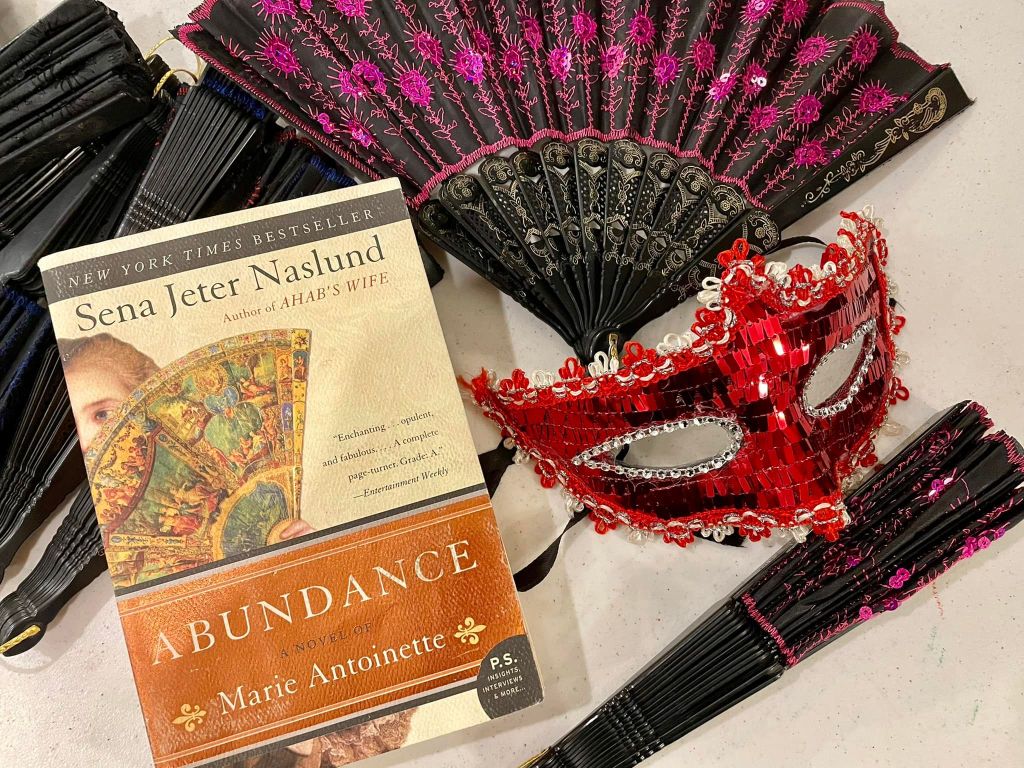
Abundance Review

Abundance by Sena Jeter Naslund   

Rating: ⭐️⭐️⭐️⭐️⭐️/5

Sena Jeter Naslund’s novel Abundance is a historical fiction that takes us into the world of Marie Antoinette, the last Queen of France before the bloody French Revolution. After finishing this novel, I find myself feeling a little bit depressed. I feel so sad because the author’s beautiful and descriptive writing made me form a strong emotional connection to Marie Antoinette as a character.

Of course, we all know how the French Queen’s story ends. But seeing her life starting from her journey to France, leaving behind her home in Austria, and transforming herself into the Dauphine was truly enthralling to read. I loved seeing a new side to a Queen who was labeled as an adulterous, greedy, and ignorant woman. While not ignoring Marie’s faults, I appreciated how the novel shows the beauty of her love for her friends and family. I truly enjoyed reading about Marie’s evolution during her years in France and the absolute courage and grace she had near the end of her life.

I would recommend this to anyone who loves historical fiction and is interested in the French Revolution.