Book Reviews

Ribbons of Scarlet Review

Ribbons of Scarlet by Kate Quinn, Stephanie Dray, Laura Kamoie, Sophie Perinot, Heather Webb, and E Knight

Rating: ⭐️⭐️⭐️⭐️⭐️/5

Ribbons of Scarlet is one of the greatest novels about the French Revolution that I have ever read. I love that six female authors came together to write a novel about the women of the French Revolution. And I absolutely love that the historical women in the book are from all walks of life—from the nobility to the poor market women in Paris. 

Ribbons of Scarlet is divided into sections about each woman—Sophie de Grouchy (the philosopher), Louise Audu (the revolutionary), Princess Elisabeth (the pious princess), Manon Roland (the politician), Pauline Leon and Charlotte Corday (the assassins), and Emilie de Sainte-Amaranthe (the beauty).

The central theme of each section always centers around each woman’s view of what being a woman means during the chaotic years of the French Revolution. Each other displayed the struggles women faced when they sought independence in a society controlled by patriarchal standards. Even during a significant revolution, women face oppression. Each woman had to confront their fears about the barriers society forced upon them, forcing them into submission and servitude to men’s whims and traditions.

I love that there are so many different points of view on the roles of women in the 18th century. One woman may find joy in marriage and motherhood, while another sees that life as the end of her freedom and life. One woman will always share her point of view, while another regretfully bends to the words of the men in her life. It was wonderful to compare and contrast the lives and beliefs of the women featured in Ribbons of Scarlet.

One of my favorite parts of the novel was the Assassin section. It was so interesting seeing the similarities and differences between Charlotte Corday and Pauline Leon, who have polar opposite views on the radicals in the revolution. Yet, they both use violence to get the points across. I also loved the conversation between Sophie de Grouchy and Manon Roland—two women who are very vocal in their opinions and, as a result, are degraded and called whores. The similarities in their marriages and differences in their progress were fascinating to read.

The continuity between each woman’s story was perfection. I love that it showed the continuation of the revolution from different viewpoints but was still clearly thought out and easily understood as a timeline of events. It was also amazing to see how one character from one section could affect a character from another section’s story and actions.

Finally, I loved how realistic and emotional each author’s writing felt. Each author was unafraid to get into the gritty details of the horrific Reign of Terror and all the emotions that went with it. As a woman reading Ribbons of Scarlet, I experienced an array of emotions, from anger to happiness to sadness to pride. The novel was indeed an emotional and thought-provoking experience.

Ribbons of Scarlet is a must-read for historical fiction fans, women’s fiction fans, and people who love to read about the French Revolution.

Favorite Quotes from Ribbons of Scarlet:

  • Nothing spares women…Whether we ask for the vote or only for bread, whether we march on the streets or keep to our salons, there are those who will find us at fault–and make us suffer for the crime of asking for more.
  • We trade wry smiles: two women who have been called whores, simply because that is the word for any woman with an opinion and a voice to express it.” 
  • Because as much as [Jacobins] killed my countrymen, they seemed to take a sick, perverted glee in killing my countrywomen. They killed us for being too political, too intelligent, too opinionated, too daring, too pretty.
  • The crowd around my guillotine hushed and cried, but around others the people cheered and celebrated. Beautiful, terrible humanity. Capable of the most inspiring and creative genius and the greatest and most unimaginable abominations.
Book Reviews

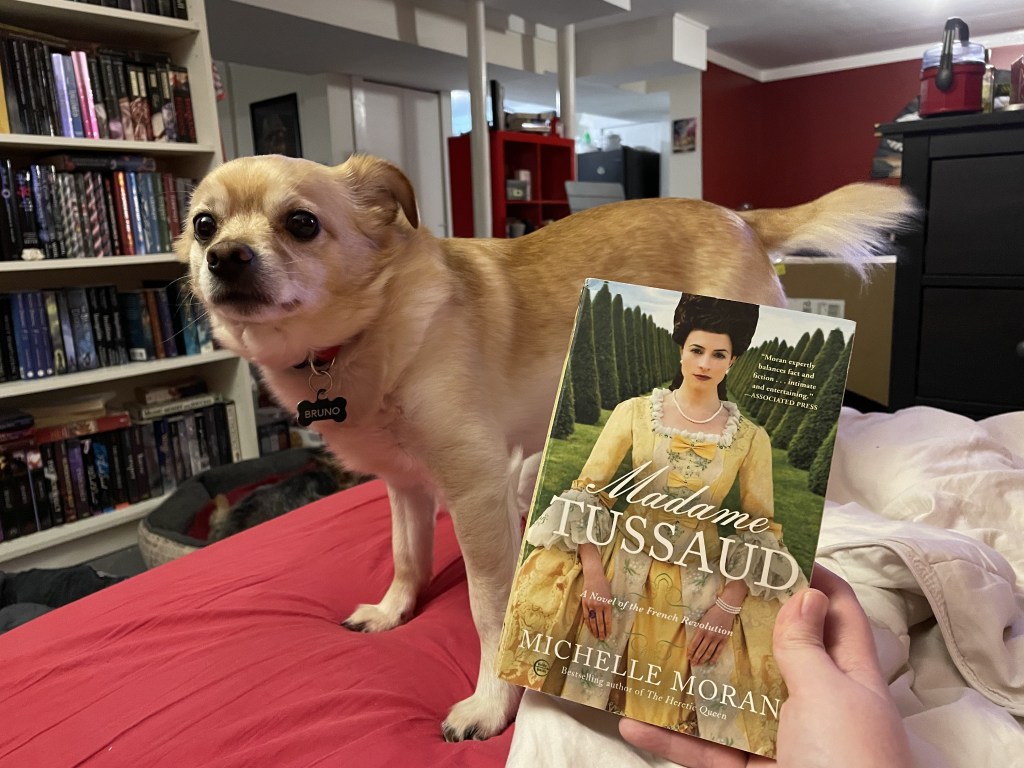
Madame Tussaud Review

Madame Tussaud by Michelle Moran

Rating: ⭐️⭐️⭐️⭐️⭐️/5

Madame Tussaud by Michelle Moran explores Marie Grosholtz’s life during the French Revolution. The story begins a year before the revolution and ends in 1802 when Marie finally leaves France.

My five-star rating is very much deserved! Madame Tussaud is a historical novel with some fictional twists, but it felt like I was experiencing what was happening in France while reading Moran’s words. Every piece of dialogue felt believable. Moran definitely put a lot of effort into producing a historically accurate take on Marie’s horrifying experiences during the Reign of Terror.

Unlike Edward Carey’s Little, Moran spent time creating an emotional bond by expressing the emotions and feelings of the characters. Moran was fearless in exploring the everchanging emotions of the French people in Paris during the revolution.

The relationship between Marie and her brothers was brilliant, especially her oldest brother Edmund. Moran delved into the complex relationship siblings have. The stormy and distant relationship between Edmund and Marie greatly contrasts Wolfgang (her youngest brother) and Marie’s loving relationship. I loved Edmund and Marie’s story arc near the book’s end. It showed how the terrible events of the revolution changed everyone in France.

I loved the sprinkle of romance present throughout the book. Henri was so caring, patient, and kind to my dear Marie. Their love story was a pleasant break from the many (and I mean MANY) awful things happening in Paris. I would have loved to see what their reunion was like at the end of the book.

Moran did a great job displaying how Marie toed the line between the royalists and the revolutionaries. The relationship between Madame Élisabeth and Marie (King Louis XVI’s sister) was refreshing. In contrast, Marie’s sometimes cautious interactions with figures like Robespierre, Danton, and Marat were riveting. Moran examined as many views on the revolution as she could in the novel. She was not afraid to discuss the genuinely heart-wrenching moments of Marie losing loved ones to the Reign of Terror. The moment Marie is forced to make her first death mask was weirdly captivating. I felt like I was sitting right next to Marie while the mob pushed the bloody, decapitated head into her hands.

I loved Moran’s take on historical figures like Marie Antoinette, Thomas Jefferson, Marquis de Lafayette, and Maximilien Robespierre. She brought these people to life in a very genuine way.

Overall, I loved Madame Tussaud. I recommend this masterpiece to anyone interested in the French Revolution and historical fiction. This novel has motivated me to look into Moran’s other books. I loved her writing style and look forward to reading more of her work.

Book Reviews

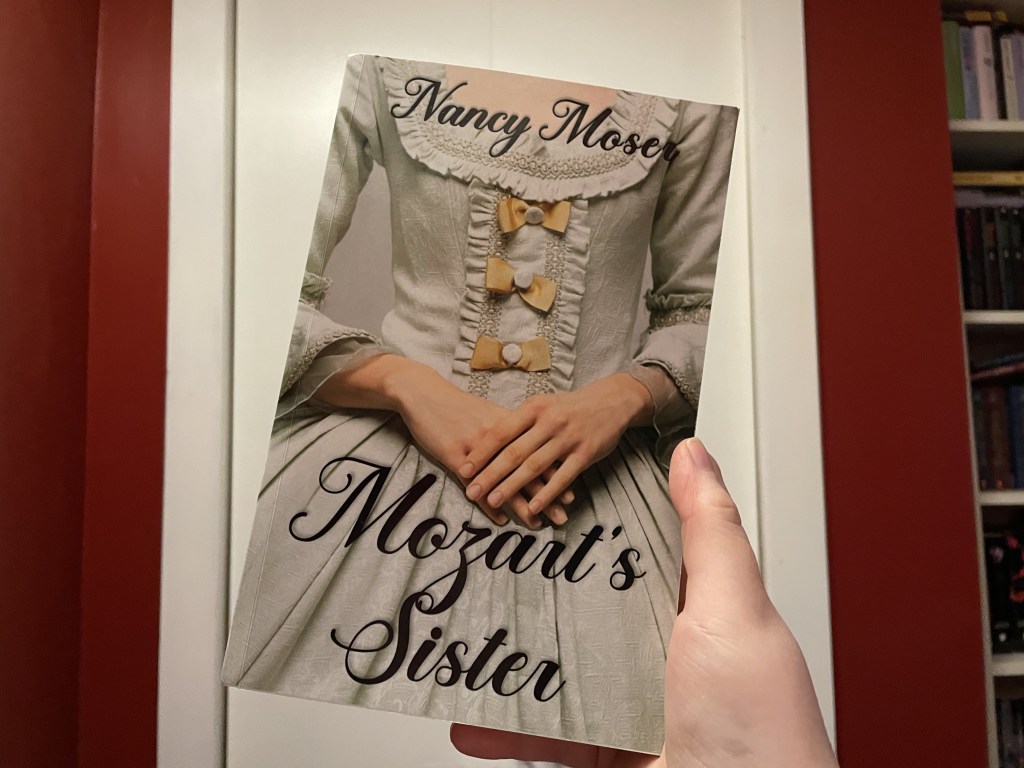
Mozart’s Sister (Moser) Review

Mozart’s Sister by Nancy Moser

Rating: ⭐️⭐️⭐️⭐️/5

In Nancy Moser’s biographical novel Mozart’s Sister, the adventures, losses, family life, and love life of Maria Anna Mozart’s life are laid out for all to see. This is the second book I’ve read about dear Nannerl (the first being Mozart’s Sister by Rita Charbonnier). Funny that both books share the same title. That perfectly reflects the shadow Wolfgang Mozart cast over his very talented sister.

The interactions between the Mozart family felt much more personal in Moser’s book than in Charbonnier’s. Papa and Mama Mozart were very present in Moser’s novel. I loved that. Papa Mozart has always been labeled as the authoritative, strict father who pushed his children too far. But, in Moser’s novel, his humanity is ever-present. It was a nice change to Charbonnier’s novel. I also loved that Moser gave Mama Mozart a chance to shine. She is always a background character when people speak of the Mozart family. Moser showed a glimpse of the inner workings of Mama Mozart in a heartbreaking way. I felt so bad for poor Mama Mozart. The interactions between Nannerl and Wolfgang felt very realistic to how an older sister and younger brother would act. I like that Moser reflected Nannerl’s struggle with being jealous of Wolfgang. It humanized her even more to me. It’s normal to be envious of a sibling. It’s normal to want attention from a parent.

I loved that Moser wrote about the struggles each member of the Mozart family faced. Each person faced their own obstacles, whether being stuck in their brother’s shadow or escaping their controlling father. Every Mozart family member had a moment to express themselves. It did not feel biased. Every conversation between the Mozart family felt like it could have actually happened. That shows how much care Moser gave to shaping each character.

Nannerl’s transformation from a younger girl to a grown woman was written spectacularly. Moser displayed Nannerl’s battle with growing older and losing the title of Wunderkind in such an emotional way that I felt like I was experiencing this evolution with Nannerl. Something interesting about Moser’s novel was the use of religion throughout the book. Unlike Charbonnier’s novel, Nannerl is very in tune with her religious beliefs and God in this book. I didn’t mind that because Moser used Nannerl’s spirituality in a subtle way to drive her character arc. Nannerl used her religion to find peace. This made perfect sense for the novel because religion held much power over Europe then.

Regarding Nannerl’s love life, I wish there were more interactions between Captain Franz d’Ippold and Nannerl! I loved their relationship. It felt organic. It felt like a real love story was brewing. The longing was ever present, which took hold of my heartstrings. However, Moser could have expressed Nannerl’s agony over not being allowed to marry Franz.

Overall, this was an excellent historical fiction novel with great historical accuracy. Moser definitely did her due diligence while researching the life of Nannerl Mozart. When it comes to Charbonnier’s Mozart’s Sister or Moser’s Mozart’s Sister

I choose Moser’s!

Book Reviews

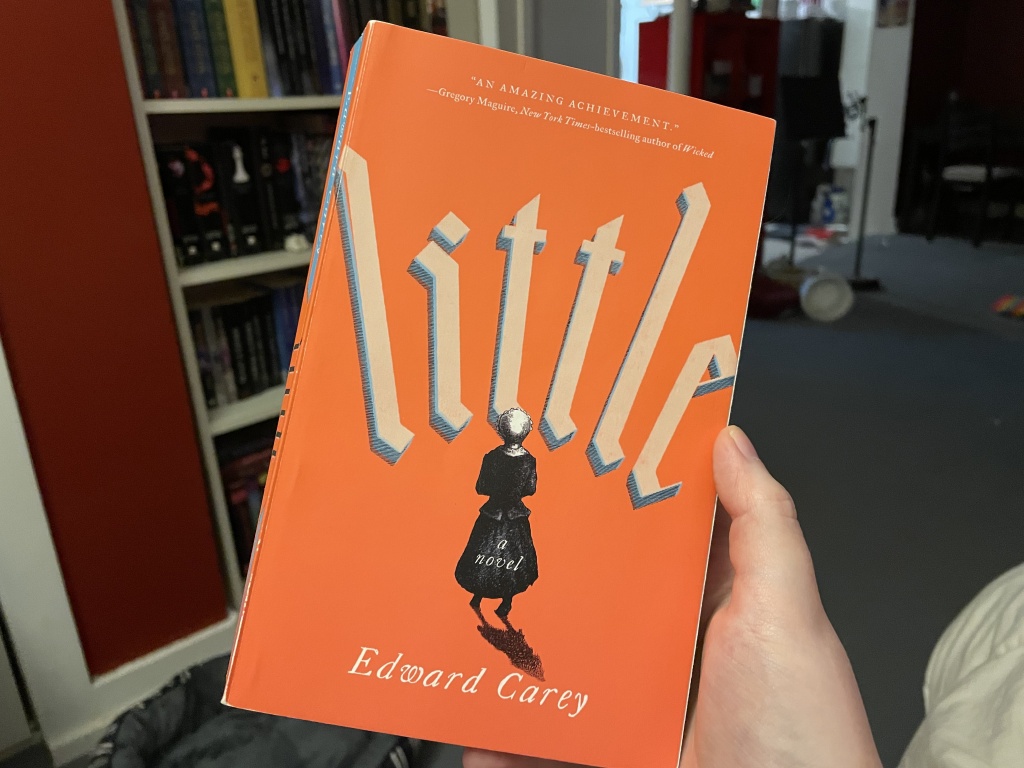
Little Review

Little by Edward Carey

Rating: ⭐️⭐️⭐️/5

Edward Carey’s Little tells the story of Marie Tussaud, the woman known for her famous wax sculptures. The novel encompasses her life from Marie’s birth to her death. From the early years of her life learning about wax to her time in Versailles to her years making death masks during the French Revolution. 

Little is written from Marie’s point of view in the first person, and because of that, I experienced a most interesting, yet odd, mind. I have never read a book where the anatomy of a human being is used so many times to describe emotions, places, and events. Marie was particularly obsessed with analyzing and detailing people’s facial features and mannerisms. This facet of Carey’s Marie made sense for her character as her love for wax figures grew. 

Once the character Dr. Curtius, her mentor, entered the scene, there was never a chapter where a human body part wasn’t used as a symbol. At times, it felt like too much, but I understood this was just a part of who Marie was, whether I liked it or not. The mix of art and anatomy was handled in a way I had never read before, and that in itself was intriguing. However, a lot of the time (especially once Marie and Dr. Curtius move to Paris), the emotional aspect of the novel was lost to me. 

I couldn’t ultimately connect to Marie, no matter how much I wanted to. I wanted more psychological and emotional writing than Carey’s physical observations and sometimes detached writing in Little. From Marie’s mother’s death to Marie being forced to make a death mask, I was missing the emotional turmoil. 

Historical fiction can be “loosely” based on actual people and events, but Little got a bit too “loose” for me. It’s always a balancing act between writing a good story and staying true to the historical figure or event. Carey went too far from Marie Tussaud’s true life for my liking. 

Overall, Little by Edward Carey was average. Not horrible, but not great. 


Book Reviews

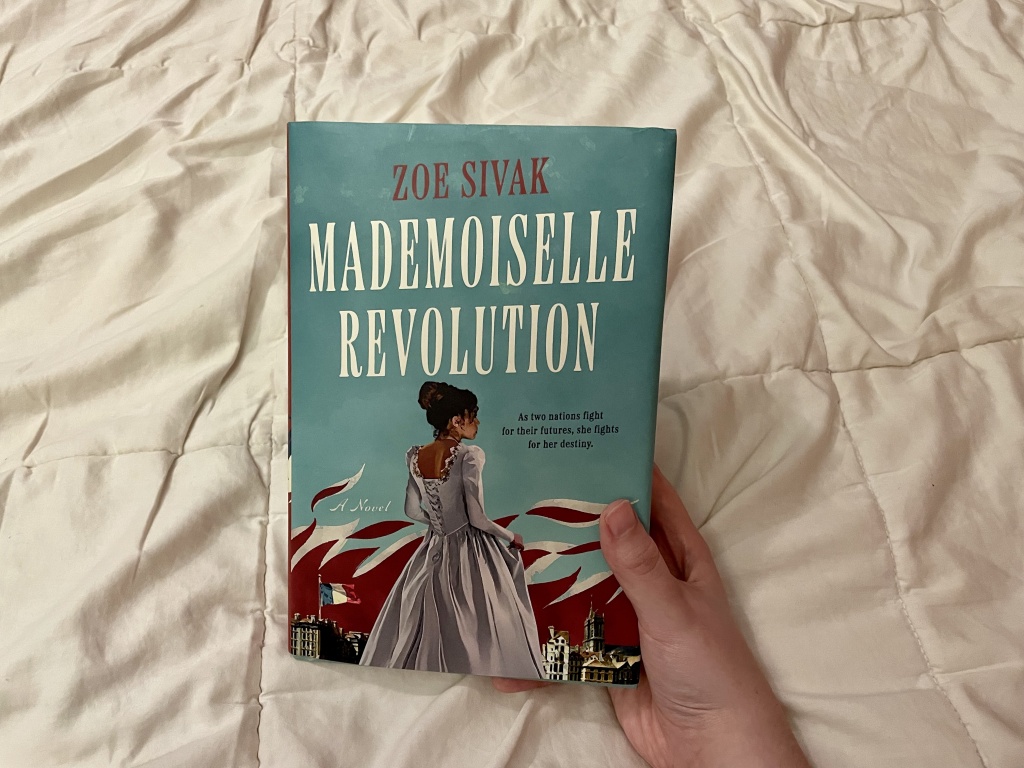
Mademoiselle Revolution Review

Mademoiselle Revolution by Zoe Sivak

Rating: ⭐️⭐️⭐️⭐️⭐️/5

I stumbled upon Mademoiselle Revolution during a spontaneous trip to the bookstore, and it was a blessing. Zoe Sivak wrote an enthralling and unforgettable book about a young biracial woman experiencing two bloody revolutions, the Haitian Revolution and the French Revolution, and trying to survive the carnage.

Sylvie de Rosiers is the daughter of a coffee plantation owner in Saint Domingue and an enslaved person who died during childbirth. All her life, she was ignorant of the horrific reality of slavery in Haiti. Yes, Sylvie experienced prejudice from society and even family members. Still, she never saw the true atrocity of slavery until it was forced right in her face. Mademoiselle Revolution starts just as the Haitian Revolution is coming to fruition.

In the beginning, Sylvie is a young ignorant girl who focuses more on her beauty than on discussing the political tensions rising in Haiti and France. Even though she seemed vain and self-centered at first glance, she had a saddening vulnerability and innocence that was moving. It was disheartening to read how Sylvie tried everything to keep her skin tone as light as possible. She knew she was beautiful, but that insecurity in the color of her skin as a biracial woman in a colony powered by slavery kept her chained to fear and self-doubt. Sylvie’s relationship with her father and eldest brother only tightened those chains as she realized the true crimes against the people her family made a fortune on. Thankfully, she at least had her other brother Gaspard. I loved him. Their relationship was endearing and pure compared to the obvious hatred her eldest brother had for her. After realizing her father could never accept all of her, Sylvie’s realization and complete breakdown were emotional to the core. The night Gaspard and Sylvie escaped during the slave rebellion came a little too soon for me. I would have loved to explore her life more in Saint Domingue and the slave uprising before Sivak took me to the Parisian city.

Sylvie and Gaspard may have escaped one revolution but entered a new one that would shape their lives…and possibly end it. The complete transformation of Sylvie from an ignorant child to an informed, passionate, and resilient woman was striking. Her connections to Cornélie Duplay and Maximilien Robespierre drove Mademoiselle Revolution once Sylvie came to Paris. Her infatuation with the attractive power of Robespierre’s presence and the safety he could provide Sylvie led her to Cornélie. Sylvie may have lusted for Robespierre, but the real romance blossomed between these two women, who both admired Robespierre, is what tugged at my heartstrings. Here are two women that were swept up in the charisma of a powerful man who would become a bloodthirsty tyrant in the name of “saving France.”

I loved how the romance in Mademoiselle Revolution was not black and white. It was not simple. It did not happen suddenly. The passion and love shared between Sylvie and Cornélie was warm yet…complicated. How could it not be when Sylvie strove to be at Robespierre’s side while falling in love with his mistress? I wanted their love protected at all costs, even more so when they fought, which could quickly get ugly. But they always found each other again. Their romance was behind closed doors and hidden in the shadows, but it was the most genuine relationship in the book.

I really wish Sylvie could have told Gaspard about her secret romance. I think he would have supported her no matter what. And that leads me to the sibling bond that never shattered even under extreme peril in France. Sylvie and Gaspard were there for each other. They were the other’s savior so many times, and their bond warmed my heart. After coming to Paris hoping for a new start, it hurt me to see the siblings be torn and beaten by the terror of the revolution. Yet somehow, her experiences did not break Sylvie.

One of my favorite moments from Mademoiselle Revolution was when Sylvie spoke to France’s National Convention to support the abolition of slavery in the French colonies. That moment solidified how much Sylvie changed and grew as a character from her days in Saint Domingue. I was so proud of who she became.

I adore Mademoiselle Revolution and highly recommend it to anyone who loves historical fiction. It is a jewel that needs to be shared.

Book Reviews

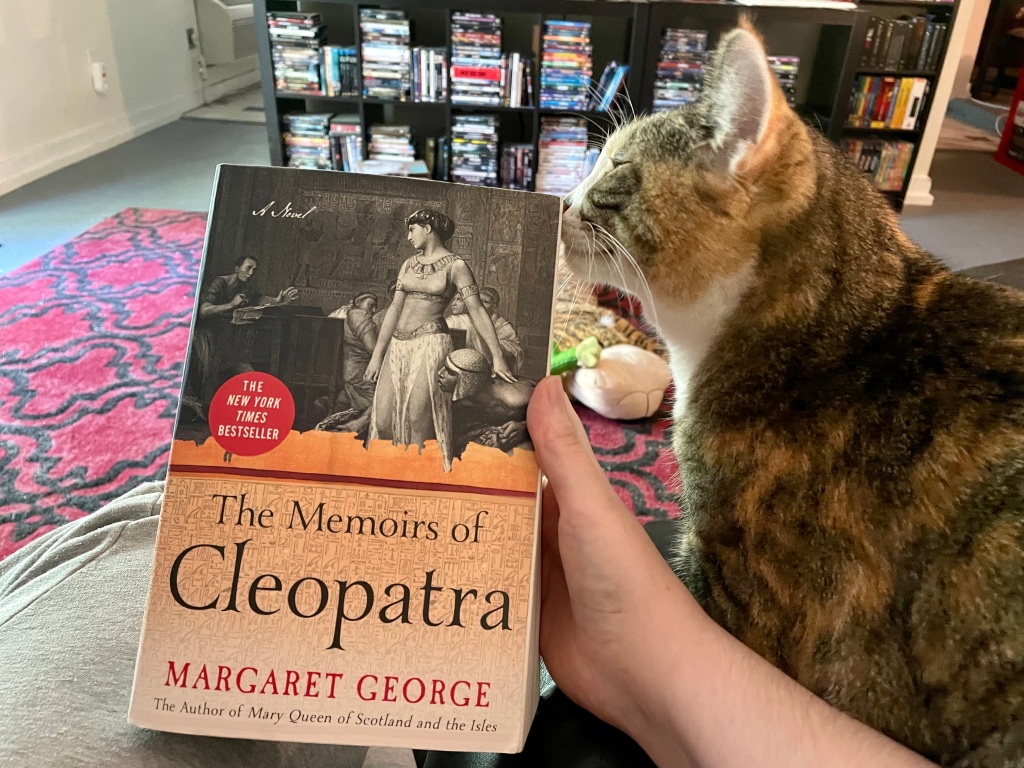
The Memoirs of Cleopatra Review

The Memoirs of Cleopatra by Margaret George   

Rating: ⭐️⭐️⭐️⭐️⭐️/5

Margaret George’s The Memoirs of Cleopatra tackle the difficult task of telling the story of Cleopatra’s life. The last Ptolemy to rule Egypt. The great Queen of Egypt. Cleopatra was not only a clever Queen but also a mother and woman who loved two powerful Roman commanders. She faced many challenges before and during her rule. Writing this novel had to have been daunting, but George pulled it off beautifully.

The Memoirs of Cleopatra is written as if Cleopatra is writing her life story on scrolls for someone to read once she is gone from the world. She wanted her truth written to combat others’ versions of Cleopatra. I enjoyed George’s choice to write out Cleopatra’s life this way. It gave a more personal feel to the novel. I especially loved how the story is so highly detailed. This is a 900+ novel filled with every possible observation, small or large, that made up Cleopatra’s daily ongoings and significant life events. 

I deeply admire the Cleopatra presented in The Memoirs of Cleopatra. You can see how clever and curious she is from a young age. Her ability to soak up knowledge like a sponge is one of my favorite qualities of Cleopatra. Once she came into power, Cleopatra’s pure perseverance and durability were what made her the ruler she was. Every choice she made in the novel was to keep Egypt safe and prospering. Her love for her country. George made it clear that although Cleopatra was a fighter in spirit, she was also a true lover. I loved reading about Cleopatra as a mother. It was apparent that she was a devoted mother and only wanted the best for her babies. I also appreciated the genuine friendship between her attendants, Iras, Charmian, Mardian, and Olympos.

Now with her strengths also came weaknesses that I did not like. Her ambition that emerged during her time with Caesar and kept growing afterward was my least favorite aspect of her personality. I wanted her to live a happy and peaceful life in Egypt with her children. But a ruler’s mindset can be taken over by the temptation of growing an empire for her family.

It would not be the story of Cleopatra without two men: Julius Caesar and Marc Antony. The two loves of her life. The two men were so different from one another. One is perceived to be a god among men. Another is a mortal forced into a role he did not want. Caesar came into Cleopatra’s life when she fought for her right to be Queen of Egypt. The instant connection between them was staggering to behold in written form. George somehow brought these two larger-than-life beings together in a mystical yet organic way. Cleopatra and Caesar’s tale of love was anything but ordinary. This was clear when George represented them as reincarnations of the goddess Isis and the god Amun during the two lovers’ first meeting and night together. George showed how difficult it was for Cleopatra to love a man who was not seen as a mere mortal. It was angering at times to see Caesar’s life in Rome (his wife, the Senate, Roman customs) affect Cleopatra so much. I didn’t particularly like Caesar as a love interest. He couldn’t give her the love and affection Cleopatra truly deserved. She couldn’t control who she fell in love with, and for that, she was constantly attacked for it by the Romans.

And her torture by the Roman people did not end with Caesar’s death. No. Cleopatra’s heart would lead her to one other Roman man. During the love affair with Caesar, Marc Antony did not play a huge role in The Memoirs of Cleopatra. He was here and there, but mostly just a side character, as Cleopatra ironically did not think much of him. When they met again years after Caesar’s murder, the sparks and chemistry flew off the pages. Cleopatra and Antony’s love was full of passion. Everything they did was extreme and passionate, from the love declarations to their fights.

In contrast, Caesar couldn’t give his whole self to Cleopatra. Antony was a willing servant to his love for her. He was not a perfect man, and he made mistakes, but it couldn’t be argued that Antony did not love with everything he had. Antony appreciated Cleopatra for the woman and leader she was. I loved that characteristic of him. However, Antony could be pretty toxic at moments in the novel. He was such a complex character. I sometimes wanted to hate him, but I couldn’t ignore his unadulterated devotion to Cleopatra.

Let’s not forget the worst character in the novel, Octavion. I hated him with my whole heart! I wanted to jump into the pages and beat that cowardly snake. He was the absolute worst. I have nothing nice to say about Octavion. I loved how Cleopatra won her final battle against him by tricking him and ending her life on her terms.

I undoubtedly enjoyed reading The Memoirs of Cleopatra. Every page was an adventure, and I experienced every possible emotion while reading. I would recommend this novel to historical fiction readers interested in the mystery of Queen Cleopatra.

Book Reviews

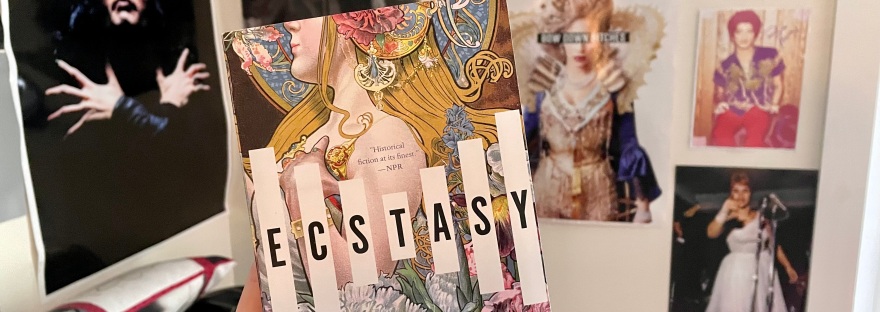
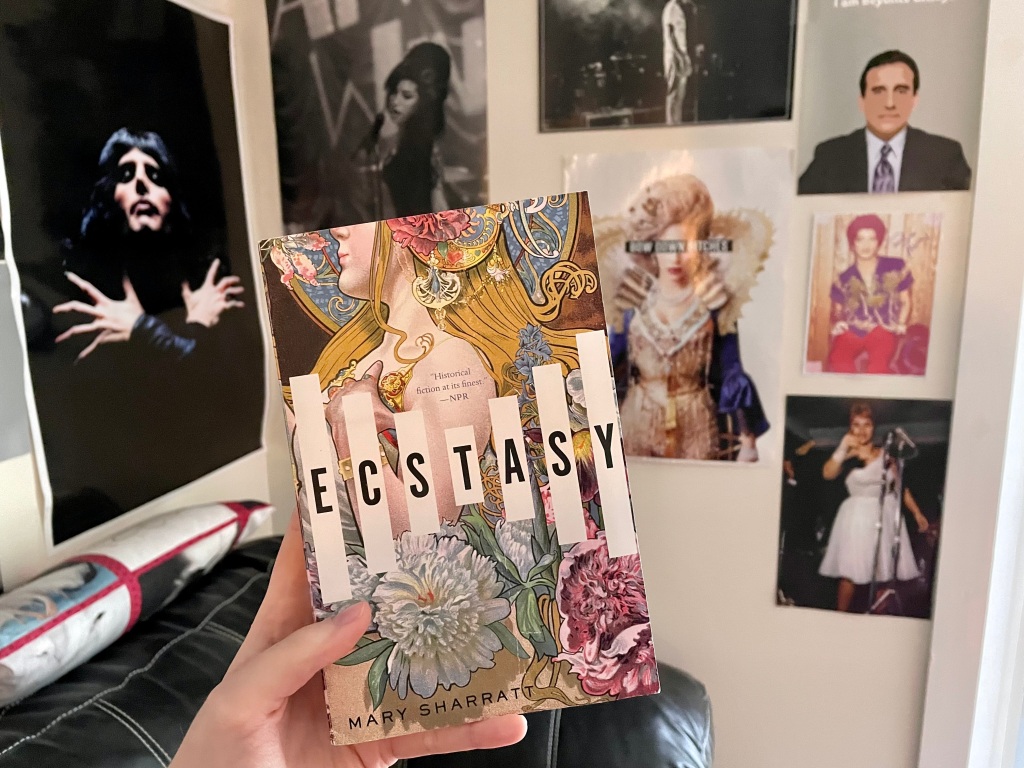
Ecstasy Review

Ecstasy by Mary Sharratt   

Rating: ⭐️⭐️⭐️⭐️⭐️/5

Alma Schindler was considered the most beautiful woman in Vienna before marriage. She lit up a room the minute she strolled in and enchanted every man that came across her. But she was not only a socialite. Alma was an ambitious and creative young woman who strove to make a name for herself as a composer. Her talent, drive, and beauty are probably what led to the men in her life falling in love with her. The most famous of her lovers was the great composer and conductor Gustav Mahler, whom she would marry at 22.

Mary Sharratt’s Ecstasy explored the life of Alma Mahler, née Schindler; from her sexual awakening at the young age of 19 to her first husband, Gustav Mahler’s death when she was 32. As a young woman living in a society full of artists, architects, and the intelligentsia, Alma, as a character, was raised believing that she could take her love for music and create a life for herself independent of a man. But as she experienced the first hint of sexual desire at 19 years old, Alma found that there was a whole other aspect of life she wanted to explore: love and lust.

As a character, Alma is impossibly complicated, and Sharratt displayed this perfectly by representing the two warring sides of Alma as the demure and obedient Eve and the defiant and carnal Lilith. In the novel, it seems Alma was constantly fighting herself. Even before she was married, the need to compose and live her life to the fullest as a New Woman of the early 1900s was challenged by the worry of being considered the “third sex” or alien compared to traditional women. Once Alma was married to Mahler, that internal war only grew more violent as she became a mother and was constrained to the ideas of what Mahler thought a wife should be. Sharratt’s narration of Alma’s inner turmoil as a woman drowning in her husband and European society’s views of a woman’s place in the world left me, as the reader, desperate for Alma’s musical survival.

Alma’s sheer passion for music was what I treasured most as I read Ecstasy. Any music lover would feel a particular connection to Sharratt’s account of Alma’s total enraptured state after hearing a dazzling piece of music. Sharratt’s effort in describing the music Alma heard made it easy to feel how significant music was in Alma’s life. To see Mahler force Alma to stop composing and focus on supporting his music was hard to read after seeing Alma’s clear adoration for listening and composing music. I was in a state of despair as, chapter after chapter Alma sank deeper and deeper into her own depression because of her husband’s selfishness. That despair turned into elation as Mahler finally saw that he was hurting his precious Almschi and started promoting her compositions. The reawakening of Alma as a composer was wonderful to read after worrying that side of her was lost forever.

The title of Ecstasy not only hinted at Alma’s passion for music but also her passion for the physical pleasures of life. From the very first chapters, Sharratt narrates a young woman’s journey experiencing the bliss and enveloping hunger for physical expressions of love for the very first time. Alma’s carnal desires were an important part of expressing her love for the men in her life in the novel. Sharratt explored a woman’s desires that society would have frowned upon by society in the 1900s and embraced the idea of women having just as much sexual freedom as men.

The final battle between Alma’s two beings inside of her, Eve and Lilith, was one of the best moments for me. Finally, Alma let all her pain out on Mahler and allowed the fierce Lilith to spring free. The absolute freedom of body, mind, and soul Alma experienced was gratifying in every sense of the word. This is what Ecstasy is all about. The ruthless war and final triumph of a woman finding her place in the world.

I would recommend this historical fiction gem to all that have a deep love for music and wants to learn about the meaning of being a woman in the early 1900s.

Book Reviews

Empress of the Night Review

Empress of the Night by Eva Stachniak   

Rating: ⭐️⭐️⭐️⭐️⭐️/5

Catherine the Great. Empress of Russia and the longest-running female leader ruling for 34 years. Formerly a princess of Anhalt-Zerbst going by the name of Sophie, the future Empress traveled to Moscow as a young girl and becoming the bride of the future Emperor Peter III. Catherine the Great found herself in a new country, surrounded by spies and ill-wishers. Even the current Empress Elizabeth had no real love for the young woman. But somehow, the new Grand Duchess fought her way to the top and ruled Russia with every ounce of grace and strength.

Stachniak’s Empress of the Night brings the world of Catherine the Great to life by setting up the story of Catherine during her final days, recalling the memories from her time in Russia. The author takes every care in the world to express every struggle, love, happiness, and anger Catherine experienced as Grand Duchess and then Empress. From the rage and abuse, Catherine’s mother thrust upon her to the betrayal of Catherine’s first Favorite Serge to the kinship she found within her supporters and other lovers. Stachniak was not afraid to explore the beauty and lust of Catherine’s great loves but also the ugly side that ended those relationships. We all know Catherine was a sexual being, and rulers of other countries loved to undermine her for that. Still, the author embraced the joys of female sexuality Catherine displayed. Catherine, as a character, was not afraid to show her pleasure for all life had to give. She revealed that a woman with so much power can still enjoy the vulnerability and softness that love brings.

While Catherine’s many loves are an essential part of the story, her decisions and lessons learned during her rule are the real scene stealers. It is a breathtaking experience to see a woman take every piece of knowledge and asset of herself to bring the world to a kneel. A world that men ruled. It is an even better moment to see this same woman still care for those around her, whether they be a servant, friend, or family member. In Empress of the Night, Catherine’s true successful leadership abilities were clear as day. Her strength compared to Peter III made it obvious how fit she was to take over as Empress. Catherine was one woman you did not want to mess with. And her network of supporters and spies shown in the novel was another transparent sign of the brilliant and determined leader she became.

As a reader, you hope that her story can continue, but you know Catherine’s reign is going to end. The author did an excellent job of balancing the legend that is Catherine the Great with the human that is Katenka. And because of that, her final moments in the last pages of Stachniak’s novel become ever the more painful.

Empress of the Night will keep you up at night reading every little morsel if you love reading historical fiction and learning about influential women in history.

Book Reviews

Mozart’s Sister Review

Mozart’s Sister by Rita Charbonnier   

Rating: ⭐️⭐️⭐️⭐️/5

When the name Mozart comes up, you probably immediately think of the legendary composer who died much too young, Wolfgang Amadeus Mozart. Many forget that Wolfgang was not the only talented child in the Mozart family.

Charbonnier’s novel Mozart’s Sister tells the story of dear Nannerl, also known as Maria Anna Walburga Ignatia Mozart, who found her talent being pushed aside so her younger brother could learn and grow as a musician and composer. The story itself is shaped as a retelling from Nannerl in letters exchanged with her student Victoria’s father, Armand d’Ippold, who develops a romantic relationship with Nannerl. From her eyes, you see the joyful and loving connection Nannerl and Wolfgang had as young children. And you also see how their relationship grew strained and ultimately nonexistent. It was horribly sad to see their love for one another be poisoned by their father, Leopold Mozart’s ambition for his son.

I hated that this young, talented women’s dream of being a professional musician and composer was stamped out by her father. It was excruciating to see Nannerl give up her love for music and composing and let this sense of bitterness and depression take over her being. But thankfully, the author did a beautiful job of showing how Nannerl’s love for music came back to her later in life.

I didn’t much care for the romance between Armand and Nannerl. And I was delighted to see the romance between her and Baptist blossom later in the book. I wished the author had given more moments between those two. We get pages and pages of Armand, but once he is out of the picture, we are so close to the end of the book that Baptist doesn’t get the attention he rightfully deserves.

I loved the ending of the book! I completely adored the amount of humor and content Nannerl experiences in those final pages after having years of unhappiness in the first half of her life. I couldn’t put Mozart’s Sister down, and I would recommend it to anyone with a love for music and historical fiction.

Book Reviews

Clara Review

Clara by Janice Galloway   

Rating: ⭐️⭐️/5

I can’t say I loved reading this book. I can’t say I hated this book. I honestly don’t know what I expected when I chose to buy Clara, but I will admit I thought I would enjoy it more.

Galloway’s novel is a historical fiction about the composer, pianist, wife, and mother, Clara Schumann. You don’t hear of many female composers and performers who lasted as long as she did and persevered in the male-dominated industry of the 19th century. I thought it would be an exciting read.

As I was reading, I felt sad, angry, and, more often than not, suffocated. I hated how Clara as a character was treated in the book. Her father, Herr Wieck, was controlling and cruel. Her husband, the famous Robert Schumann, could be just as horrible as Wieck. Ever since I started taking an interest in music history, I’ve heard about the great love story that is Clara and Robert, but for me, it wasn’t a romance. It was a tragic story of two lonely souls. I know Robert Schumann suffered greatly with his mental health, and it didn’t help that doctors of his time couldn’t help him much. I know some things he said and did to Clara were not easily controllable. I get that, but it didn’t stop me from feeling incredibly sad for her. Clara had much to give to this world. The fact she had to deal with all the shit two of the most influential men in her life broke my soul. It was incredibly depressing seeing how much Clara had to hold back her emotions, walk on eggshells, and cautiously speak and react in a way that didn’t somehow hurt her father or husband.

Two things I did enjoy were that the author didn’t sugarcoat Clara’s life and showed how strong Clara was throughout her life. However, I wished the book wouldn’t have ended when Robert died. I would have liked to see her life after his death. She was more than just a wife to Robert Schumann; I wanted to see more of that.

Would I recommend this novel? Probably not.